
New Study Shows Explainability is a Must for Older Adults to Trust AI
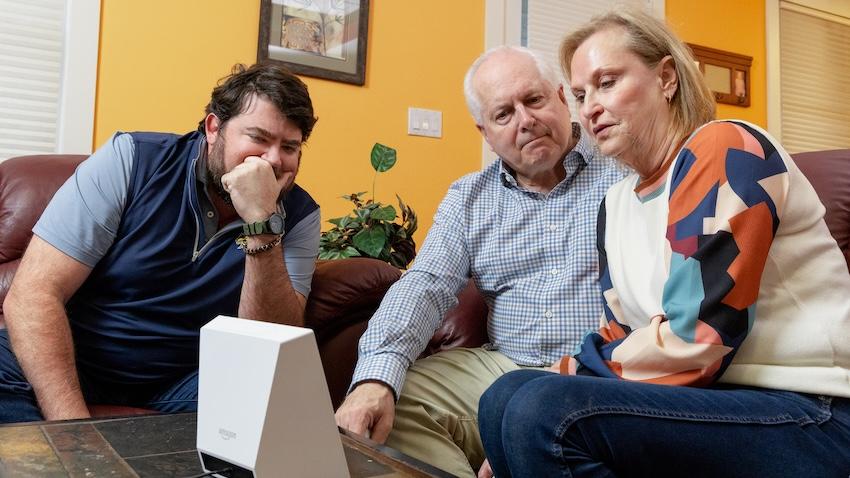
Voice-activated, conversational artificial intelligence (AI) agents must provide clear explanations for their suggestions, or older adults aren’t likely to trust them.
That’s one of the main findings from a study by AI Caring on what older adults expect from explainable AI (XAI).
AI Caring is one of three AI Institutions led by Georgia Tech and funded by the National Science Foundation (NSF). The institution supports AI research that benefits older adults and their caregivers.
Niharika Mathur, a Ph.D. candidate in the School of Interactive Computing, was the lead author of a paper based on the study. The paper will be presented in April at the 2026 ACM Conference on Human Factors in Computing Systems (CHI) in Barcelona.
Mathur worked with the Cognitive Empowerment Program at Emory University to interview 23 older adults who live alone and use voice-activated AI assistants like Amazon’s Alexa and Google Home.
Many of them told her they feel excluded from the design of these products.
That’s one of the main findings from a study by AI Caring on what older adults expect from explainable AI (XAI).
AI Caring is one of three AI Institutions led by Georgia Tech and funded by the National Science Foundation (NSF). The institution supports AI research that benefits older adults and their caregivers.
Niharika Mathur, a Ph.D. candidate in the School of Interactive Computing, was the lead author of a paper based on the study. The paper will be presented in April at the 2026 ACM Conference on Human Factors in Computing Systems (CHI) in Barcelona.
Mathur worked with the Cognitive Empowerment Program at Emory University to interview 23 older adults who live alone and use voice-activated AI assistants like Amazon’s Alexa and Google Home.
Many of them told her they feel excluded from the design of these products.
Recent Stories
School of IC Professor Receives Endowed Professorship
Thursday, April 9, 2026
New Study Shows Explainability is a Must for Older…
Tuesday, March 31, 2026

Researchers Look to Bolster Technology Support for…
Monday, March 30, 2026